Introduction
Search for University of Maryland scholarships and you will find pages promising full tuition, room and board, and a stipend. Those awards exist. The Banneker/Key Scholarship can cover up to the full cost of attendance, which the university currently estimates at more than $62,000 a year for out-of-state students. The problem is that the university’s own rules limit its admission-based merit scholarships to U.S. citizens and eligible non-citizens. A Nigerian, Ghanaian, Kenyan or Ugandan student who needs an F-1 visa is not in that group.
That is the central fact behind any honest guide to University of Maryland USA scholarships 2027. UMD’s undergraduate admissions office states plainly that, as a publicly funded institution, it is unable to provide financial assistance to international students. Small pockets of funding do exist, mostly later in a student’s degree or through departments and outside sponsors, but a new African applicant should not plan on a UMD award covering the bill.
This guide separates what you can realistically pursue from what you cannot, explains how admission works for students with WAEC results, lays out the 2026–2027 cost figures you will need for visa paperwork, and points to the official pages where each claim can be checked.
If you are applying from Nigeria with WAEC results and need an F-1 student visa, understanding these funding restrictions before submitting your application is particularly important.
About the University of Maryland, USA
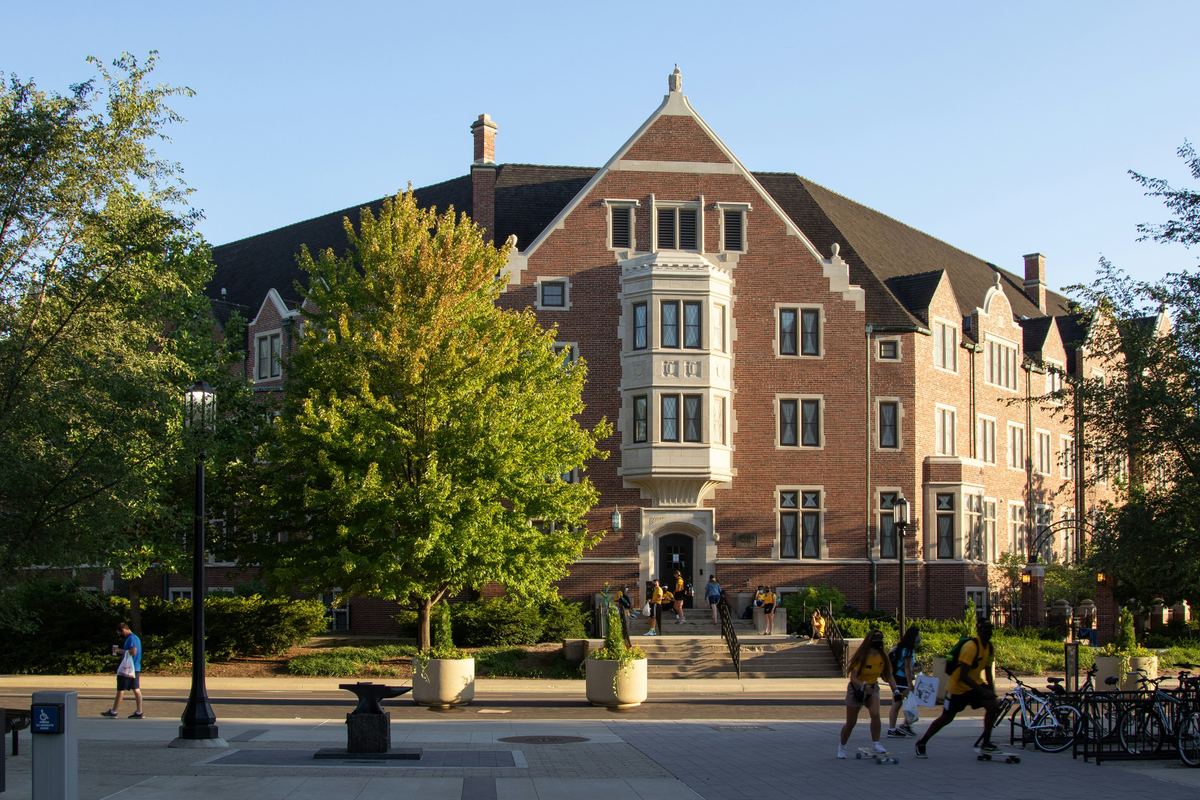
The University of Maryland, College Park (UMD) is a public research university in College Park, Maryland, about eight miles from downtown Washington, D.C. The campus has a Metro stop, which matters more than it sounds: internships, embassies, federal agencies and international organizations are a short ride away, and many students use that access.
According to the university’s published facts, undergraduate enrollment is 31,133 across 12 colleges, with more than 100 bachelor’s degree programs. Business, engineering and computer science are among the better-known areas, and they are also the programs that carry extra tuition charges (more on that in the cost section). Some majors are Limited Enrollment Programs with tougher admission criteria, so choosing a major is not a formality.
For African students the appeal is practical: a large flagship university, strong STEM and business options, an established international student office, and a location with real career connections. UMD also lists Nigeria, Ghana, Kenya, Uganda, South Africa and several other African countries among the places where English proficiency waivers may be considered, which I cover below. I could not verify a current official count of international undergraduates, so I have left that figure out rather than quote a third-party number.
Does the University of Maryland Offer Scholarships for African and International Students?
Short answer: very little at the point of admission, and nothing that a first-year African applicant can count on. The confusion comes from mixing up four separate things.
Admission eligibility. Being admitted is open to international applicants. You apply as an international student if you are not a U.S. citizen or permanent resident, or if you hold or intend to seek an F-1 or J-1 visa.
Freshman merit scholarship eligibility. These are awarded automatically through the admission review to students who apply by the early action deadline. UMD’s admissions page says U.S. citizens and eligible non-citizens are considered. The Office of Student Financial Aid defines eligible non-citizens as permanent residents and people granted certain statuses such as refugee or asylum. F-1 student visa holders are not on that list.
Departmental scholarship eligibility. Colleges and departments run their own awards. Each sets its own rules, and some require citizenship or residency. Others may not. You have to check award by award.
External scholarship eligibility. Outside organizations decide who can apply, and some explicitly welcome international students.
If you are a Nigerian citizen who already holds U.S. permanent residence, refugee or asylum status, the picture is different, because you may fall within “eligible non-citizen.” Everyone else applying from Lagos, Accra, Nairobi, Kampala or Johannesburg on a student visa should treat the freshman merit awards as closed doors.
Quick comparison: what is open to F-1 applicants?
| Funding source | Open to F-1 applicants? | Available to new freshmen? | What it offers | Status for Fall 2027 |
|---|---|---|---|---|
| Banneker/Key Scholarship | No (U.S. citizens and eligible non-citizens) | Yes, through admission | Full or partial award | Not available to F-1 applicants |
| President’s Scholarship | No | Yes, through admission | $2,000 to $20,000 per year | Not available to F-1 applicants |
| Dean’s Scholarship | No (also in-state only) | Yes, through admission | $1,500 or $4,500 per year | Not available |
| Roberta Ma Scholarship | Yes, once enrolled | No | About $500 average | Last confirmed unavailable for 2025–2026 |
| Departmental scholarships | Varies by award | Varies | Varies | Ask each department |
| Scholarship Universe (UMD and outside awards) | Depends on each scholarship | Only after admission and a UMD login | Varies | Open to admitted students |
| External sponsors and foundations | Depends on each sponsor | Depends | Varies | Verify each one independently |
University of Maryland Scholarship Opportunities for International Students
Roberta Ma Scholarship
One of the university’s few specifically identified scholarship opportunities for international students is the Roberta Ma Scholarship, and it is also the one most often misdescribed online. It is not an entrance scholarship.
According to the Maryland Global (International Student and Scholar Services) page, applicants must be F-1 or J-1 degree-seeking students sponsored by UMD, in good academic standing with a GPA of at least 3.0, and enrolled at UMD for the previous full academic year, meaning both a fall and a spring semester. Undergraduates must have completed at least 84 credit hours when they apply. Demonstrated financial need is required.
The money is modest. The fund is $10,000 in total, with an expected average award of about $500, applied to the student’s UMD account and usable only for qualified educational expenses.
Availability is the bigger issue. The official page is headed “Not available for Academic Year 2025-2026,” and I found no notice reopening it for 2026–2027 or later. If you are an admitted student who one day reaches the credit threshold, contact International Student and Scholar Services (ISSS) to ask whether the fund is accepting applications. For a student starting in August 2027, 84 credits is realistically a third-year milestone, so this is a possibility for later, not a plan for the first year.
Departmental Scholarships for Undergraduate Students
UMD’s financial aid office maintains a directory that links each college and school to its own scholarship page, including Engineering, Computer, Mathematical, and Natural Sciences, Agriculture and Natural Resources, Arts and Humanities, Business, Public Health, Public Policy, Education, Journalism, and Letters and Sciences. UMD’s advice is to contact the department, college or school directly about availability, eligibility, applications and deadlines.
When you read a departmental award, check these things before spending time on it:
- Citizenship or residency: does it say U.S. citizens, Maryland residents, or “all students”?
- Enrollment stage: many awards go to current students, not applicants.
- GPA, major, credit-hour and financial need requirements.
- Whether the award uses the FAFSA (international students cannot file it).
The financial aid office’s international students page makes the baseline clear: only students with U.S. citizenship or specified eligible statuses qualify for federal, state and institutional aid. Its practical advice for everyone else is to ask your academic department whether it has scholarships. Treat any departmental award as a bonus if it turns out to accept international students, not as a foundation of your budget.
External Scholarships Through Scholarship Universe
Scholarship Universe is UMD’s scholarship-matching platform. You create a profile, answer matching questions about your major, college, academic record, financial need, interests and affiliations, and the system matches you to scholarships you appear to qualify for. There are two separate searches: one for UMD scholarships (departmental and institutional endowed awards, but not the merit awards decided during admission) and one for outside scholarships posted by non-university organizations. You complete matching questions on each platform separately.
Two points matter for African applicants. First, access is for newly admitted and current students who have set up their UMD Directory ID and password, so you cannot browse it from home before you apply. Second, matching reflects each scholarship’s own rules. If an award is limited to U.S. citizens, answering the questions honestly should keep it from matching you, which saves time. UMD recommends using the platform at least once a year before the fall semester starts.
University of Maryland Freshman Merit Scholarships: What African Applicants Should Know
You will see these awards mentioned everywhere, so it helps to understand them. All three are decided automatically through the admission review for students who apply by the November 1 early action deadline, with no separate application. They cannot be combined with one another, and students are limited to one merit award through admission. And once more: they are for U.S. citizens and eligible non-citizens.
Banneker/Key Scholarship
UMD calls this its most prestigious freshman merit award. It can cover up to full tuition, mandatory fees, housing and food, a book allowance, and it includes admission to the Honors College. Every freshman applicant admitted to the Honors College is considered. Semifinalists are interviewed in late February or early March and notified of their amount by April 1.
The financial aid policy page estimates the full 2026–2027 award at $62,806 for an out-of-state student living on or off campus (it uses standard on-campus housing and food figures), and a partial award at $12,000 plus a $1,250 book allowance for non-residents. The scholarship runs for up to eight consecutive semesters and requires a 3.20 cumulative GPA and 30 credits completed each academic year. It does not cover items such as health insurance.
President’s Scholarship
The President’s Scholarship is a four-year award ranging from $2,000 to $20,000 per year, open to both in-state and out-of-state applicants who meet the citizenship rule. Recipients are chosen from the application: academic achievement, activities, awards, honors and the essay. Notification comes by April 1.
Dean’s Scholarship
The Dean’s Scholarship gives $1,500 for the freshman year or $4,500 a year for both freshman and sophomore years. It is not renewable, and only in-state applicants are eligible, so it is closed to international applicants for two separate reasons. Roughly 400 new recipients arrive each fall.
Bottom line for F-1 applicants: none of these three is something to apply for or budget around. If a website says otherwise, ask it to cite a UMD page.
University of Maryland Undergraduate Admission Requirements for Nigerian Students
UMD’s international freshman checklist asks for the following. Always read the current version on the official page, because it is the authority.
The online application. This includes an essay, an activities and awards list or resume, and an $80 non-refundable application fee unless you receive a fee waiver (waivers must be submitted before you submit the application). UMD’s essay prompts are published on its website.
Two letters of recommendation. One from your school counselor and one from a teacher, sent directly by the recommender.
Official high school transcripts. Each school you attended must submit an official transcript listing all course results for the years equivalent to U.S. grades 9 to 12. UMD names WAEC among the national secondary examinations whose official results and certificates of completion should be included where appropriate, alongside GCSE/GCE, CBSE and CXC/CSEC. Documents not in English need certified English translations. Most Nigerian school records are already in English, but if you are unsure whether translation applies to yours, email the admissions office.
Test scores (optional). UMD is test-optional through the Fall 2027 application cycle, so SAT or ACT scores are not compulsory. Submitting them is your choice.
Credential evaluation (only for university study). A third-party evaluation from Educational Credential Evaluators (ECE) or Josef Silny & Associates is required for post-secondary credentials, but not for secondary school records. If you spent a year at a Nigerian university before applying, this applies to you. If you are applying straight from secondary school, it does not.
English proficiency. Covered in the next section.
I am deliberately not giving WAEC grade targets. UMD does not publish a minimum WAEC score, and any number you see on a blog is a guess. Admission is holistic, and the national education system and the types of institutions attended are among the factors considered for international applicants.
English Language Requirements for International Applicants
UMD accepts the Duolingo English Test (DET), IELTS and TOEFL. The published passing scores are 120 on the DET, 7 on IELTS, and 95 on TOEFL iBT (0 to 120 scale). Scores below certain levels, for example IELTS 6.5 or lower and TOEFL 94 or lower, signal that the Maryland English Institute may be required before degree study. TOEFL MyBest superscores are not accepted. Scores must be less than two years old and sent directly by the testing agency, using UMD’s reporting code 5814.
Now the part many Nigerian applicants miss: UMD may waive the test requirement. Its list of English-speaking countries includes Nigeria, Ghana, Kenya, Uganda, South Africa, Tanzania, Zambia, Zimbabwe, The Gambia and Namibia, among others. The page says the waiver applies where English is your first language, you hold citizenship from, or you completed a high school or university degree in, one of those countries, and that all elements must be completed by the application deadline. The wording leaves room for interpretation, and waivers are granted at the admissions office’s discretion, so do not assume. Email UMD’s international admissions office (contact details are on its international applicants page) with your school and country, and get the answer in writing before deciding whether to pay for a test.
How to Apply for Undergraduate Admission at the University of Maryland from Nigeria
Keep admission and scholarships in separate boxes in your mind. This is the admission process only.
- Start at the official international applicants page. Use the admissions website, not an agent’s summary. Fee waiver and deadline details live there too.
- Choose an application platform. Freshmen can use the Common App or ApplyWeb. UMD says the choice does not affect how your application is reviewed.
- Complete the application. Use your full legal name exactly as on your passport, and give a foreign street address (not a P.O. Box) so immigration documents can be issued if you are admitted. Write the essay and activities list carefully.
- Request your documents. Ask your school to send official transcripts and arrange for your counselor and a teacher to send their recommendations directly. Include WAEC results where appropriate.
- Sort out English proficiency. Either send official scores with code 5814 or confirm in writing that a waiver applies to you.
- Pay the $80 fee or request a waiver. Waivers must be submitted before you submit the application.
- Activate your Terps Application Portal (TAP). You should get an email with instructions within two business days of submitting. Use TAP to confirm receipt of every document. It can take up to 10 business days for new materials to show as received, and confirming receipt is your responsibility.
- Receive your decision. Decisions arrive through the portal.
You do not submit visa or financial documents with the application. Those come only after you are admitted. If you get an offer, International Student and Scholar Services (ISSS) takes you through the I-20 and visa steps.
Quick checklist for Nigerian applicants
University of Maryland Application Deadlines for Fall 2027
UMD’s deadlines page lists these dates for international freshmen entering in fall:
| Milestone | Date |
|---|---|
| Early action deadline | November 1, 2026 (passed) |
| Early action decisions | By February 1, 2027 |
| Regular deadline | January 20, 2027 |
| Regular decisions | By April 1, 2027 |
| Enrollment confirmation | May 1, 2027 |
Today is November 17, 2026, so the early action deadline has passed. The regular deadline of January 20, 2027 is still ahead, and an application that is complete by then is considered in the regular round. After January 20, UMD reviews applications on a rolling, space-available basis, which is a much weaker position.
Applying in the regular round does not cost an F-1 applicant any scholarship, because the merit awards were never available to international applicants in the first place. It would, for a U.S. citizen, because the merit awards require the November 1 early action deadline. A complete application also means every required document has arrived, not just the form, so request transcripts and recommendations early.
UMD also says that students applying for fall are automatically considered for spring admission.
How Much Does It Cost to Study at the University of Maryland?
The financial aid office’s 2026–2027 estimate for an undergraduate who is not a Maryland resident, living on campus, looks like this:
| Item | Estimated annual cost |
|---|---|
| Tuition | $42,266 |
| Mandatory fees | $1,820 |
| On-campus housing, cable and phone | $10,290 |
| Food plan (average) | $7,180 |
| Books and supplies | $1,250 |
| Transportation | $1,514 |
| Personal costs | $1,200 |
| Estimated total | $65,520 |
A few cautions. These are estimates, not bills. Books, transportation and personal costs are averages that UMD does not charge you. Students in business, engineering and computer science pay additional tuition by credit hour, so check the differential tuition page for your major. UMD also charges a fee of $125 per semester to students who require an I-20 or DS-2019 issued by the university. The table does not itemize health insurance, which UMD requires for all international students, so budget for it separately and confirm the current premium with the university. Tuition and fees must be paid in full before classes start.
For immigration purposes, UMD says an international student must show proof of funds covering one year of expenses (tuition, fees, books, insurance and living costs). This documentation is requested only after you are admitted and have confirmed enrollment. ISSS is strict about what counts: funding amounts that are not guaranteed cannot be accepted, and solvency certificates are not accepted. Foreign government scholarships with terms that conflict with the university’s mission or policies are not accepted either. In practice, a scholarship only helps your visa file if the award is firmly committed in writing.
Other Scholarship Opportunities African Students Can Explore
I am not going to name specific foundation or corporate scholarships here. I could not verify, for this article, a currently open undergraduate award for African students that also works at UMD, and the brief for this piece was not to pad it with guesses or with postgraduate programmes. Here is what you can do instead.
Use the databases UMD itself points to. UMD’s pages for international students list free scholarship databases for non-U.S. citizens, including EduPass (see the links table at the end). Your school counselor or a local U.S. education advising service can also help you find out which funders currently accept African undergraduates.
Check each scholarship’s fine print. Look for undergraduate level, applicant nationality, country of study, whether the award is paid directly to the university, and current deadlines. A scholarship that is postgraduate-only, restricted to a particular country, or already closed is not an option, however attractive the headline figure.
Home-country and employer sponsorship. Government or institutional education funding in Nigeria and other African countries changes often and many schemes are postgraduate-focused, so verify directly with the awarding body. Employer or family sponsorship is common in practice, and ISSS can tell you what documents it needs.
Private loans. UMD’s financial aid office says international students can apply for a private loan if they find a U.S. citizen or permanent resident co-signer, and otherwise may be able to find funding through their home country or international lenders. Read the repayment terms before committing.
Work. F-1 students may work on campus up to 20 hours a week during the semester and more during breaks, per ISSS, without separate authorization. That helps with living costs, but it will not fund a $65,000 year.
Be wary of paid “scholarship agents.” No one can sell you a UMD merit award. Verify anything with the university directly.
For a wider search, look at universities that do offer merit aid to international undergraduates, and at related guides on this site: [INTERNAL LINK: “Fully Funded Undergraduate Scholarships for International Students 2027”], [INTERNAL LINK: “Fully Funded Scholarships for Nigerian Students 2027”], [INTERNAL LINK: “Scholarships in the USA for African Students”], [INTERNAL LINK: “How to Study in the USA from Nigeria”], and [INTERNAL LINK: “Undergraduate Scholarships in Canada for International Students”].
Frequently Asked Questions
1. Can Nigerian students get scholarships at the University of Maryland? Not through UMD’s freshman merit awards, which are for U.S. citizens and eligible non-citizens. Limited opportunities may exist through departments, Scholarship Universe after admission, and outside sponsors, but UMD’s admissions office says it cannot provide financial assistance to international students.
2. Does the University of Maryland offer fully funded undergraduate scholarships to international students? I found no fully funded undergraduate scholarship for new international applicants in UMD’s official materials.
3. Is the Banneker/Key Scholarship available to Nigerians? Not to Nigerians who need an F-1 visa. It is limited to U.S. citizens and eligible non-citizens, such as permanent residents.
4. Can African students apply for the President’s Scholarship? There is no separate application, and the award follows the same citizenship rule. F-1 applicants are not considered.
5. What is the Roberta Ma Scholarship? A small fund for enrolled F-1 and J-1 students with a 3.0 GPA, at least 84 undergraduate credits, a full prior year at UMD and demonstrated need. Awards average about $500 from a $10,000 fund. It was listed as unavailable for 2025–2026, and I found no later announcement.
6. Can Nigerian students apply to UMD with WAEC results? Yes. UMD names WAEC among the national exam results it expects with transcripts where appropriate. It does not publish a minimum WAEC grade.
7. Does the University of Maryland require IELTS? Not necessarily. UMD accepts IELTS (7), TOEFL iBT (95) or Duolingo (120), and may waive the requirement for applicants who meet its criteria, which list Nigeria among the English-speaking countries. Confirm with admissions before assuming a waiver.
8. Is SAT compulsory for international applicants? No. UMD is test-optional through the Fall 2027 cycle.
9. What is the University of Maryland application deadline for Fall 2027? The early action deadline of November 1, 2026 has passed. The regular deadline is January 20, 2027, with later applications reviewed as space allows.
10. How much does it cost for an international student to study at UMD? The 2026–2027 non-resident on-campus estimate is $65,520 a year, before the I-20 fee, health insurance and differential tuition for some majors.
11. Can international students receive departmental scholarships? Some might, depending on the award. Each college sets its own rules, so contact the department.
12. Can international students work while studying at the University of Maryland? F-1 students can work on campus up to 20 hours a week during the semester and more during breaks. Off-campus work needs prior authorization.
Final Thoughts
The University of Maryland is a strong university with a real international community, but it is not a realistic full-funding target for most new African undergraduates. The large merit awards belong to citizens and eligible non-citizens, the Roberta Ma fund is small and aimed at later-year students, and departmental and outside awards need case-by-case checking.
The sensible approach is to decide whether you can finance the $65,520 estimate (plus insurance and fees) before you apply, or to build a shortlist that includes universities with documented merit aid for international undergraduates. If you do apply to UMD, make the January 20, 2027 deadline, resolve the English proficiency question in writing, and ask each department about funding once you are admitted. Verify every claim you read, including this one, against the official pages below.
Official Scholarship and Application Links
Below are the official University of Maryland scholarship, admission and financial information pages, together with selected external examination and application services referenced in this guide. University links are provided wherever possible, while external services are included only where they are relevant to the application process. The Banneker/Key, President’s and Dean’s awards have no separate application at all: they are decided inside the admission application.
| Resource | Official link | What you will find |
|---|---|---|
| International Admissions (information page) | https://admissions.umd.edu/apply/international-applicants | Requirements, checklist, platforms and services for international freshmen |
| Undergraduate application (start here) | https://admissions.umd.edu/apply-now | Entry point to apply; regular deadline January 20, 2027 |
| Common App (UMD) | https://www.commonapp.org/explore/university-maryland | Third-party application platform linked from UMD’s international page |
| ApplyWeb freshman application | https://www.applyweb.com/forms/UMDFYR | UMD’s alternative application platform, linked from the same page |
| Application Deadlines | https://admissions.umd.edu/apply/application-deadlines | Early action (November 1, 2026) has passed; regular, decision and confirmation dates |
| Fee waiver | https://admissions.umd.edu/persona/fee-waiver | How to request an application fee waiver before submitting |
| Submitting Documents | https://admissions.umd.edu/apply/submitting-documents | How to send transcripts, recommendations and test scores |
| Terps Application Portal | https://terpengage.umd.edu/tap/s/ | Where applicants track received documents and decisions |
| English Language Proficiency | https://admissions.umd.edu/apply/english-language-proficiency | Accepted tests, passing scores, reporting code 5814 and the waiver country list |
| Duolingo English Test | https://englishtest.duolingo.com/applicants | Test information for applicants |
| IELTS | http://www.ielts.org/ | Test information |
| TOEFL | http://www.ets.org/toefl | Test information |
| Maryland English Institute | https://marylandenglishinstitute.com/ | English coursework some admitted students must complete first |
| Educational Credential Evaluators (ECE) | https://www.ece.org/ECE.htm | Evaluation of post-secondary credentials (not needed for secondary records) |
| Josef Silny & Associates | http://www.jsilny.org/ | Second approved evaluator for post-secondary credentials |
| Freshman Merit Scholarships (overview) | https://admissions.umd.edu/tuition/freshman-merit-scholarships | U.S. citizens and eligible non-citizens only; no separate application |
| Banneker/Key Scholarship policy | https://financialaid.umd.edu/resources-policies/bannekerkey-scholarship-policy | Award amounts and renewal rules; not open to F-1 applicants |
| President’s Scholarship policy | https://financialaid.umd.edu/resources-policies/presidents-scholarship-policy | Policy details; not open to F-1 applicants |
| Dean’s Scholarship policy | https://financialaid.umd.edu/resources-policies/deans-scholarship-policy | Policy details; in-state only |
| Roberta Ma Scholarship (information page, no application link) | https://marylandglobal.umd.edu/global-learning-all/international-students-scholars/connect-isss/roberta-ma-scholarship | Eligibility and amounts; listed “Not available for Academic Year 2025-2026”, 2027 availability unconfirmed |
| Departmental Scholarships directory | https://financialaid.umd.edu/types-aid-umd-institutional-aid/departmental-scholarships | Links to each college’s scholarship page; each sets its own rules |
| Engineering scholarships | https://eng.umd.edu/scholarships | Departmental; check citizenship rules per award |
| Computer, Mathematical, and Natural Sciences | https://cmns.umd.edu/undergraduate/scholarships | Departmental; check citizenship rules per award |
| Agriculture and Natural Resources | https://agnr.umd.edu/admissions/scholarships | Departmental; check citizenship rules per award |
| Arts and Humanities (undergraduate) | https://www.arhu.umd.edu/academics/undergraduate-studies/scholarships-academic-honors | Departmental; check citizenship rules per award |
| Robert H. Smith School of Business (undergraduate) | https://www.rhsmith.umd.edu/programs/undergraduate/admissions/financial-aid-and-scholarships | Departmental; check citizenship rules per award |
| School of Public Health (undergraduate) | http://sph.umd.edu/content/financing-your-degree | Departmental; check citizenship rules per award |
| Scholarship Universe (how it works) | https://financialaid.umd.edu/resources-policies/scholarship-search | Platform overview; open to admitted students with a UMD Directory ID |
| Scholarship Universe: UMD scholarships login | http://umd.scholarshipuniverse.com | Login only after admission |
| Scholarship Universe: outside scholarships login | http://umd-external.scholarshipuniverse.com | Login only after admission |
| International Student Financial Aid | https://financialaid.umd.edu/resources-policies/international-students | Who qualifies for federal, state and institutional aid; private loan options |
| Proof of Financial Resources (ISSS) | https://marylandglobal.umd.edu/global-learning-all/international-students-scholars/getting-started/students/admitted-f-1j-1-students/proof-financial-resources | Funding rules for the I-20 and DS-2019, plus scholarship databases for international students |
| EduPass financial aid | https://www.edupass.org/finaid/ | Free scholarship resource for international students, listed on UMD’s aid page |
| Financial Certification | https://admissions.umd.edu/apply/financial-certification | Proof of funds is requested after admission and enrollment confirmation |
| Cost of Attendance (2026–2027) | https://financialaid.umd.edu/resources-policies/cost-attendance | Estimates, not bills |
| Undergraduate Tuition and Fees (Bursar) | https://billpay.umd.edu/UndergraduateTuition | Current billed tuition and fee rates |
| Differential Tuition FAQs | https://financialaid.umd.edu/resources-policies/differential-tuition-faqs | Extra tuition for business, engineering and computer science majors |
| Mandatory health insurance | https://www.health.umd.edu/mandatory-insurance | Insurance requirement for international students |
| Employment for F-1 students (ISSS) | https://marylandglobal.umd.edu/global-learning-all/international-students-scholars/employment-taxes/employment-f-1-international-students | On-campus work rules and limits |
| UMD Facts and Figures | https://research.umd.edu/facts | Campus location and enrollment figures |
For questions about admission or scholarship policy, use the contact details on the information pages above.