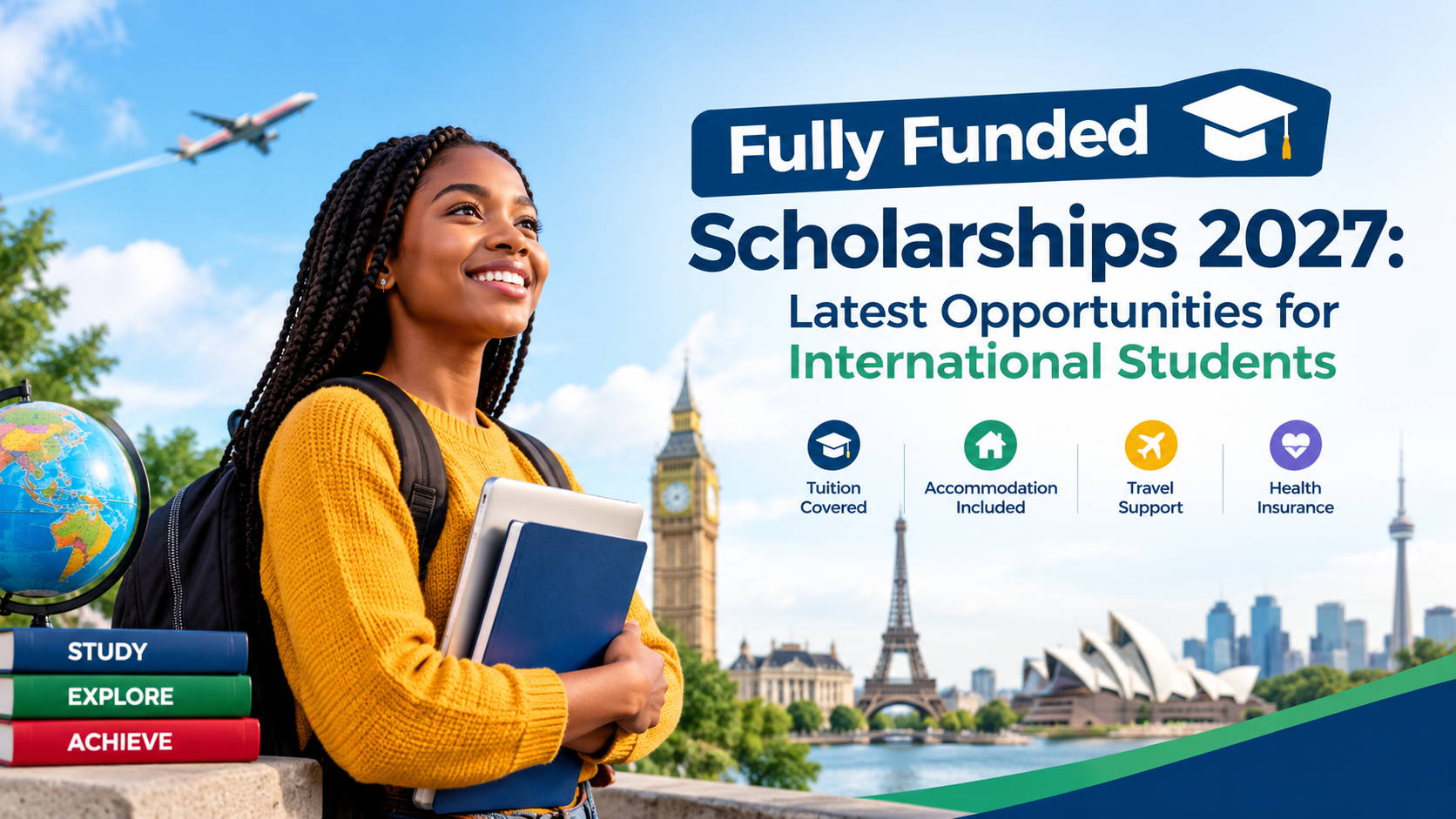
Studying abroad can open doors to excellent education, international career opportunities, and personal growth. However, the cost of tuition, accommodation, food, travel, health insurance, and other living expenses can make an overseas degree difficult to afford.
The good news is that some universities and government-funded scholarship programmes offer financial support to international students pursuing undergraduate degrees. Depending on the scholarship, successful applicants may receive full tuition coverage, living allowances, accommodation support, travel assistance, and other benefits.
If you are searching for fully funded undergraduate scholarships for international students in 2027, this guide will introduce you to opportunities worth researching, explain what they cover, and show you how to prepare a competitive application.
One important point: a scholarship advertised as “fully funded” may not cover every possible expense. Always check the official scholarship conditions before applying.
What Is a Fully Funded Undergraduate Scholarship?
A fully funded undergraduate scholarship is a financial award designed to cover most or all of the major costs associated with completing a bachelor’s degree or another eligible first-degree programme.
Depending on the sponsor, funding may include:
- Full or substantial tuition fees.
- A monthly stipend for living expenses.
- University accommodation or a housing allowance.
- Travel costs, including an international flight.
- Health insurance or medical support.
- Preparatory language courses, where applicable.
- Other allowances specified by the scholarship provider.
Benefits vary considerably. Some programmes cover tuition and living costs but require students to pay for visa applications, document authentication, personal expenses, or other items.
Why Apply for Undergraduate Scholarships in 2027?
Applying for a scholarship can make international education more accessible without requiring your family to pay the full cost of studying overseas.
A scholarship may also provide access to recognised universities, academic resources, research opportunities, professional networks, and a multicultural learning environment.
However, scholarships are competitive. Strong grades are important, but some programmes also consider leadership, community involvement, financial need, personal achievements, and the applicant’s potential to contribute to society.
1. Global Korea Scholarship (GKS-U) — South Korea
The Global Korea Scholarship for Undergraduate Degrees, commonly known as GKS-U, is a South Korean government scholarship programme for eligible international students.
Depending on the applicable award terms, benefits can include airfare, Korean-language training, tuition support, a living allowance, medical insurance, and other approved assistance.
Who should consider it?
Students who want to pursue an eligible undergraduate degree in South Korea and meet the programme’s nationality, age, academic, health, and other requirements.
How does the application work?
The programme has different application routes, including an embassy track and a university track. The participating institutions, eligible departments, required documents, and application procedures depend on the route and current guidelines.
Important deadline update: The main 2027 embassy-track application window ran from September 15 to September 30, 2026. As of October 28, 2026, that window has closed. Some university-track opportunities may follow separate institutional schedules, so check the current official notice to determine whether any suitable application remains available. Do not assume that every university is still accepting applications.
2. Japanese Government MEXT Scholarship — Japan
The Japanese Government’s Ministry of Education, Culture, Sports, Science and Technology (MEXT) offers undergraduate scholarships to eligible international students.
Depending on the applicable rules, the award may include a monthly allowance, tuition-related support, and travel assistance. Many undergraduate applicants also undertake preparatory education, depending on their placement and programme requirements.
Who should consider it?
Students who meet the scholarship’s academic, age, nationality, and subject-specific conditions and are prepared to follow the prescribed application and selection process.
How do students apply?
One common route is embassy recommendation. Applicants submit their documents through the Japanese embassy or consulate responsible for their country and may be required to take examinations and attend interviews.
The schedule varies by country. For applicants in Nigeria, the embassy’s published 2027 embassy-recommendation application notice states that applications are no longer being accepted. Therefore, the regular 2027 route should not be presented as an open opportunity for new applicants. Students can prepare for a future cycle and monitor official announcements for the next available intake.
3. Türkiye Scholarships — Türkiye
Türkiye Scholarships is a government-funded programme offering opportunities for international students at different study levels, including undergraduate education.
Depending on the award and placement, benefits can include university placement, tuition support, a monthly stipend, accommodation, health insurance, a flight ticket, and Turkish-language training.
Who should consider it?
International students who meet the current eligibility requirements and wish to study an eligible programme at a participating institution in Türkiye.
What makes the programme worth researching?
It offers a centralised application process and considers applicants for eligible programmes according to the scholarship’s selection and placement rules. Applicants should carefully research the available subjects and institutions before making their choices.
The general application period is commonly listed as January 10 to February 20. However, dates for a future cycle should not be assumed until the official calendar confirms them. Check the programme’s current announcement before preparing an application around those dates.
4. Stipendium Hungaricum — Hungary
Stipendium Hungaricum is a Hungarian government scholarship programme that supports eligible international students studying at participating Hungarian institutions.
For undergraduate students, the scholarship’s benefits generally include tuition-fee exemption, a stipend, accommodation support or a housing contribution, and medical insurance under the programme’s applicable terms.
These benefits may not cover every living expense, so students should calculate the likely cost of living in their chosen city before accepting an offer.
Who should consider it?
Students whose nationality and intended programme are eligible under the agreements between Hungary and their home country.
Important application information: The application period for the 2026/2027 academic year has passed. As of October 28, 2026, the 2027/2028 application cycle has not yet opened according to the programme information available. Prospective applicants should monitor the official announcement rather than rely on an unconfirmed deadline.
Which Scholarship Should You Research First?
Your best option depends on your academic record, nationality, preferred course, financial circumstances, and whether the application window is still open.
If you are considering South Korea, investigate the current GKS-U university-track notices where applicable. If you are planning for a future cycle, MEXT, Türkiye Scholarships, and Stipendium Hungaricum are also worth monitoring.
Do not apply simply because a scholarship is described as fully funded. First confirm that your nationality, intended subject, academic qualifications, and graduation status meet the requirements.
Continue Reading
In Part 2, we will examine fully funded opportunities in Canada and the United Kingdom, including scholarship coverage, eligibility considerations, and important application deadlines.
CLICK HERE TO READ PART 2: Fully Funded Undergraduate Scholarships in Canada and the UK for 2027